The client
Jaya Sentosa has traded from Jalan Baliwerti 108 in central Surabaya since 1995, and has grown into one of the most complete sanitary and water-pump shops in the city — selling to buyers in Surabaya, out of town, and off the island entirely. Bathroom and kitchen fittings, household goods, and the swimming-pool side of the business: design, maintenance and the equipment that goes with it.
The range is the business. Pumps — deep-well, shallow-well, submersible, booster, distribution, pool — water heaters in gas and electric, taps for the basin, the kitchen wall, the kitchen counter and the garden, showers, closets, wastafel, sinks, hobs, cooker hoods, water filters, tandon, plumbing and fittings. Brands people already trust: Ariston, Grundfos, DAB, Rinnai, Modena, Wasser, Paloma, Stiebel Eltron, Roca, Shimizu, alongside their own label, Bortonni.
That depth is an asset across a counter, where someone describes the problem and a person who knows the stock answers it. Online it turns into a liability, because a customer looking for a shallow-well pump does not want to meet a hundred and seventy-four products on the way to it.
What we did
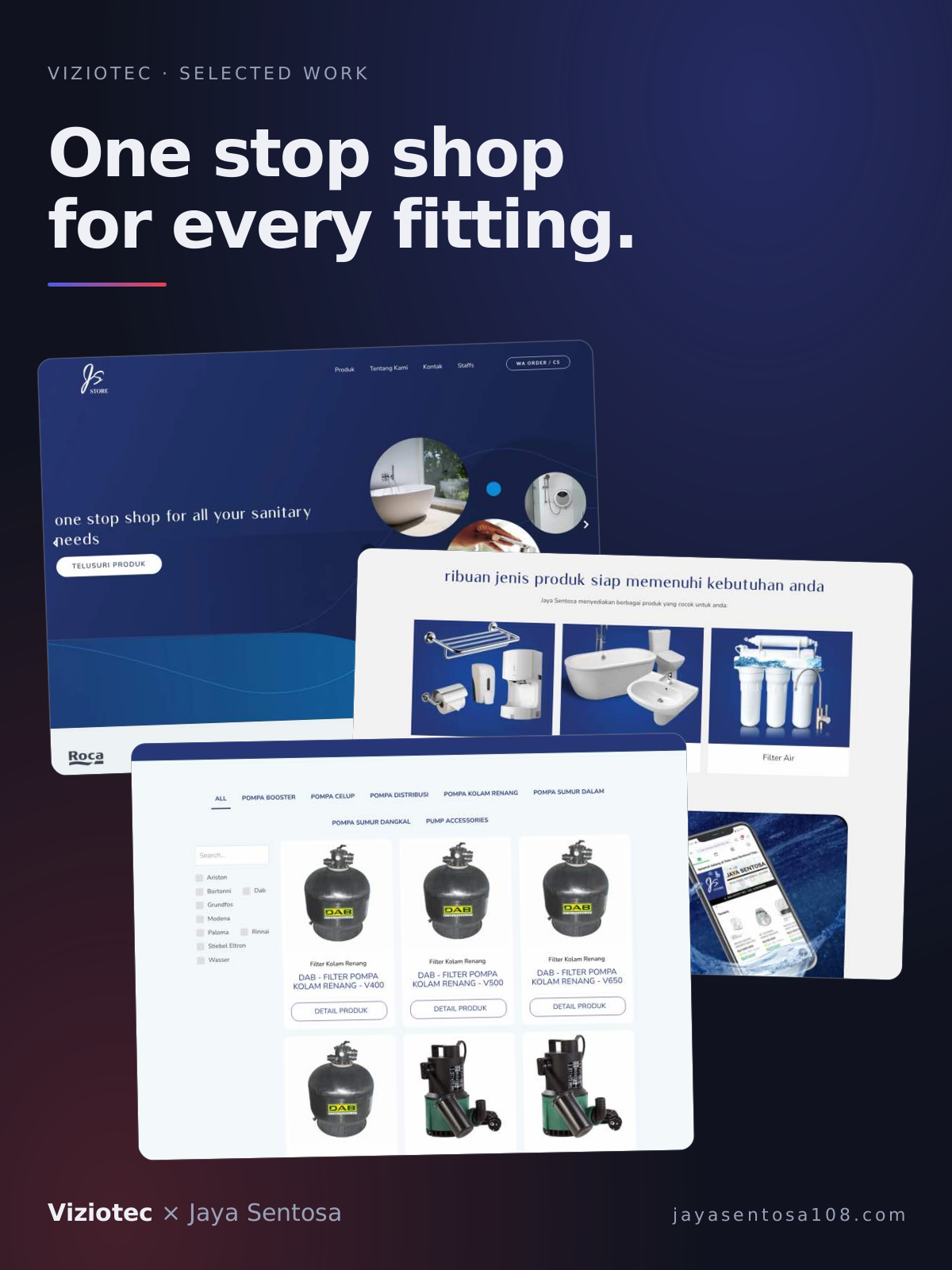
So the landing page is built to hand a visitor to the catalogue as quickly as it can, and to spend what little time it keeps on the reasons to buy here at all. It opens on the proposition — one stop shop for all your sanitary needs — then the brands carried, then the shop itself and the decades of customers across Indonesia behind it. Only after that does it get to the range, and when it does it moves: eleven categories on a carousel, three in view at a time, every one of them a door into that part of the catalogue rather than a picture of it.
Inside a category the catalogue filters on two axes at once, because that is how the stock is actually shopped. A visitor in Pompa Air narrows by type — booster, celup, distribusi, kolam renang, sumur dalam, sumur dangkal, accessories — or by brand, and can combine the two, with a search box beside them. Someone who came knowing they want a Grundfos gets there in a click; someone who only knows their well is deep gets there by a different route, and both land on the same pump. Thirty sub-lines sit under five headings without any of it surfacing as a menu the visitor has to read first.
Behind the catalogue it is a real store, not a brochure with prices on it: cart, checkout and customer accounts all run on the site. Alongside them the page carries the ways this shop already sells — a WhatsApp order line with pricing that rewards using it, and the Shopee and Tokopedia storefronts — so the site meets customers on whichever channel they already trust instead of insisting on its own. There is a staff-only area behind a login for the counter team, and a house-brand section for Bortonni, which needed to read as a brand in its own right rather than as one more product line.
It is built mobile-first, because a customer standing in a half-plumbed bathroom is holding a phone. The category carousel is a thumb swipe rather than a row that shrinks to fit, both filter axes stay usable at that width, and the product names — brand, then type, then model — stay legible at the size they are actually read at.